Turning a leftover bank tool into a focused rate service
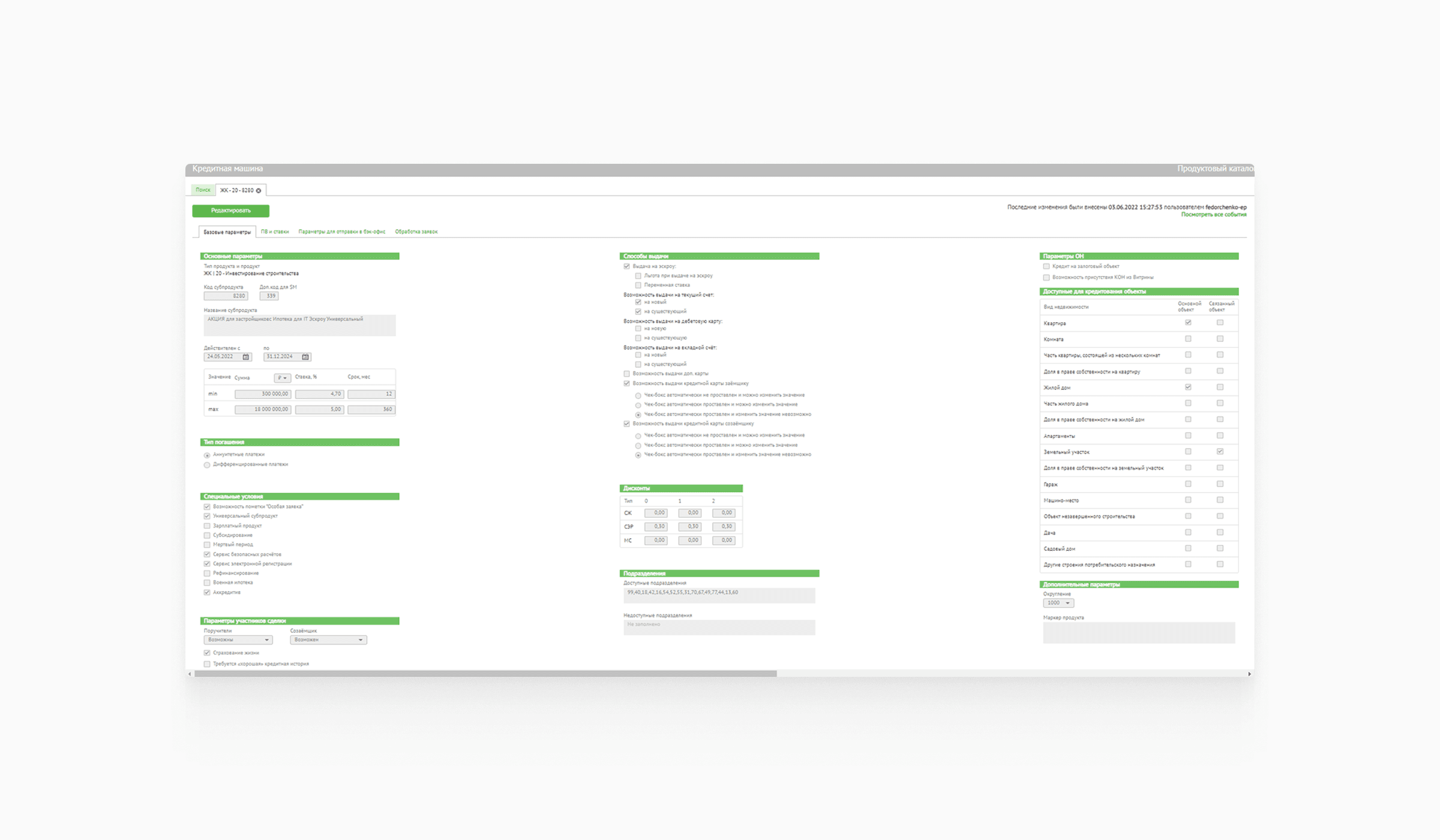
Mortgage rate work moved from Sber to Domclick, but the bank's tool came along unchanged. It carried around twenty features this team never used. A wrong rate means the company loses money or loses the customer, so every change was checked by hand. I rebuilt the tool around the one job managers actually do.
Role: Sole product designer, guided by my design lead
- Faster core tasks
- 50%+
- Matrix errors
- -76%
- Interviews and gemba sessions
- 10 + 3
Problem
The real job was the day the central bank moves
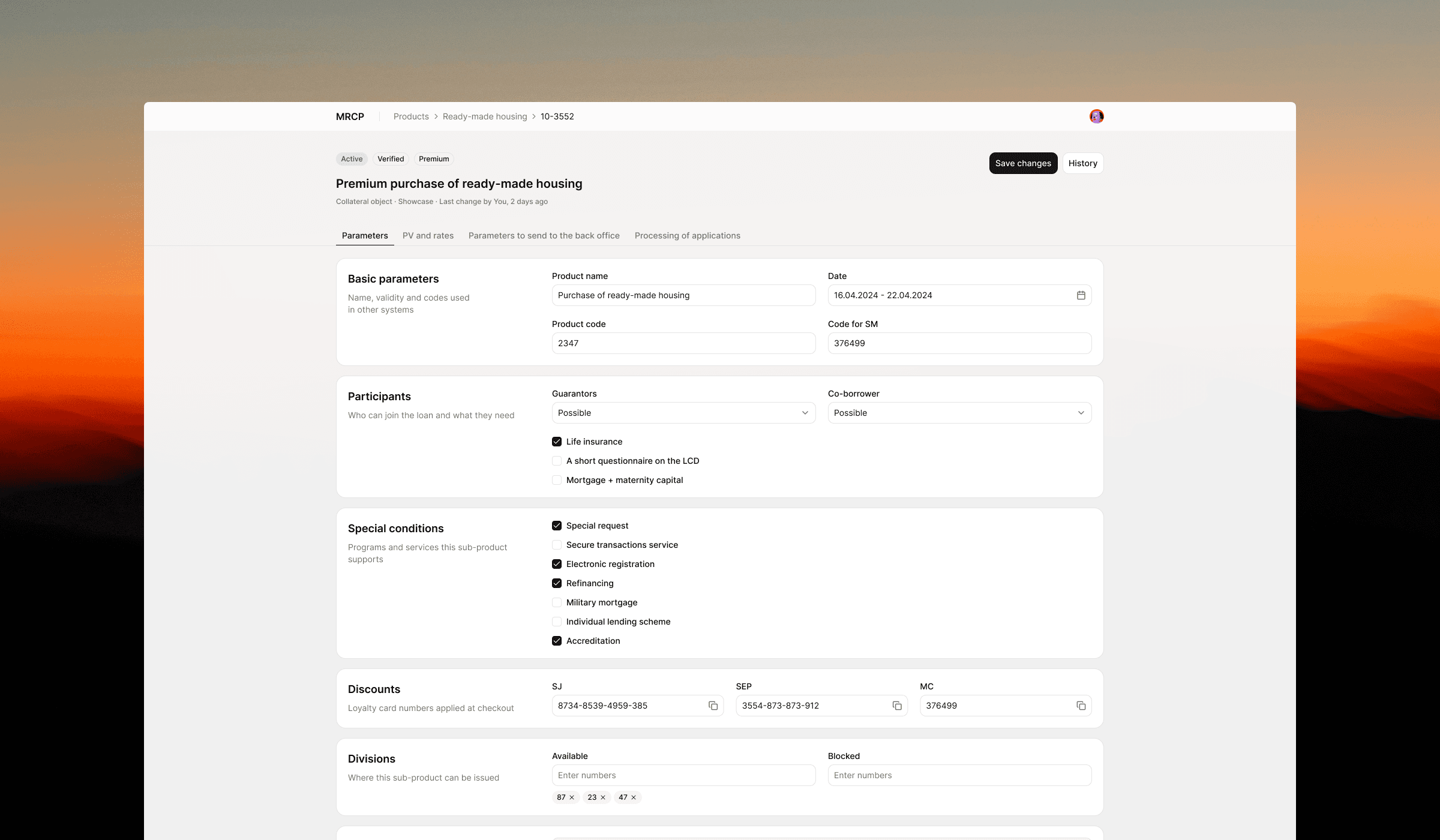
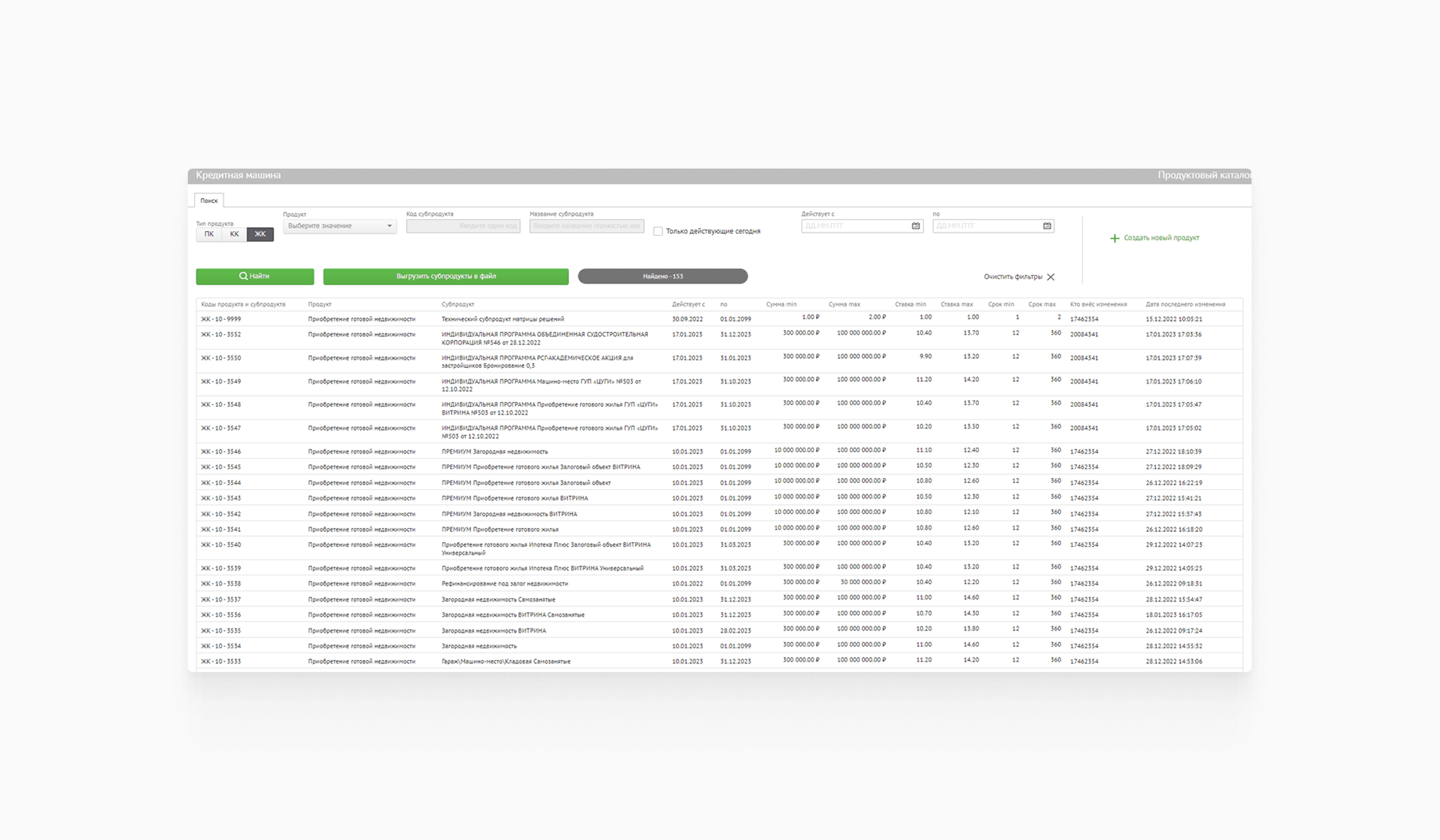
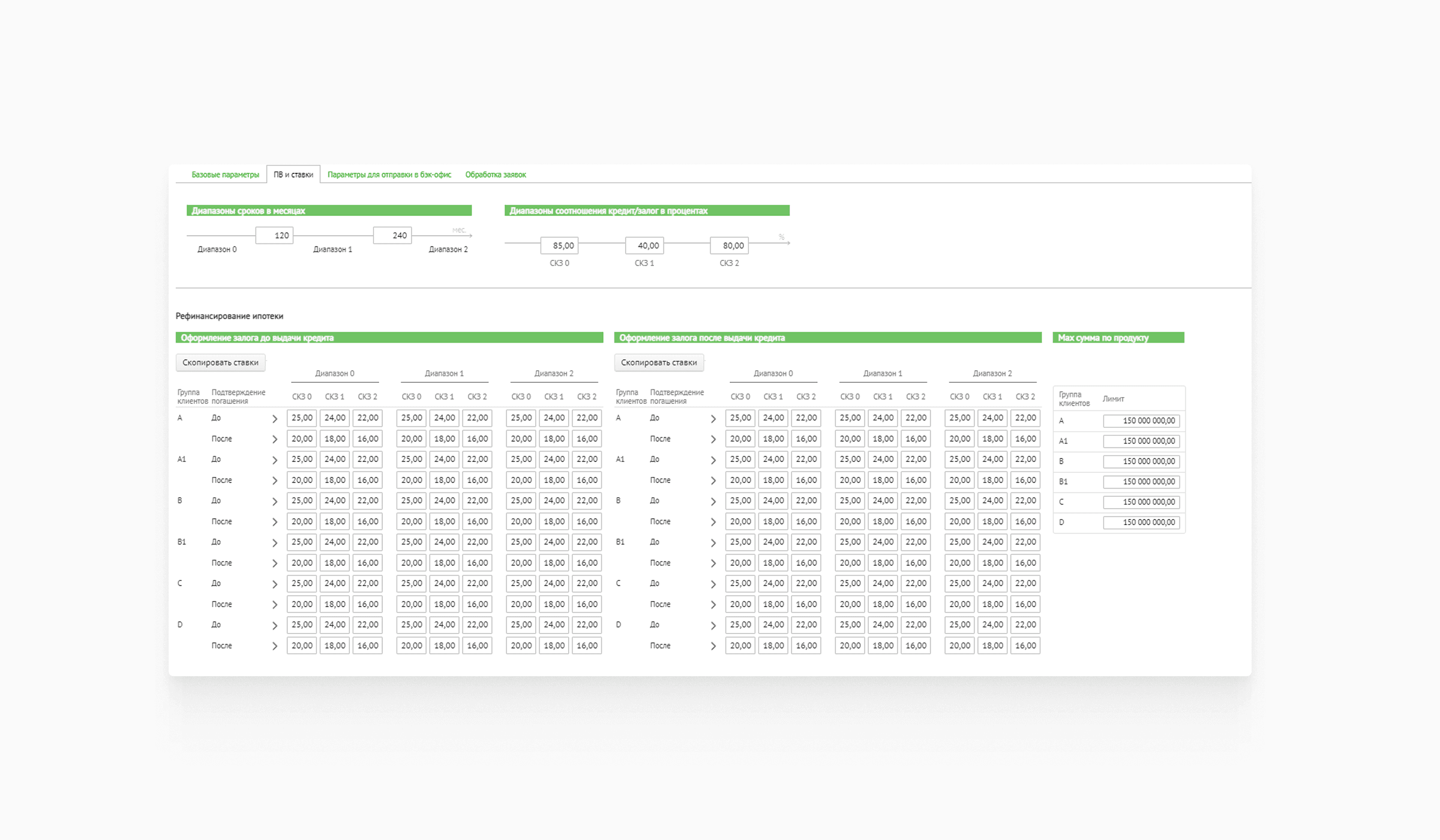
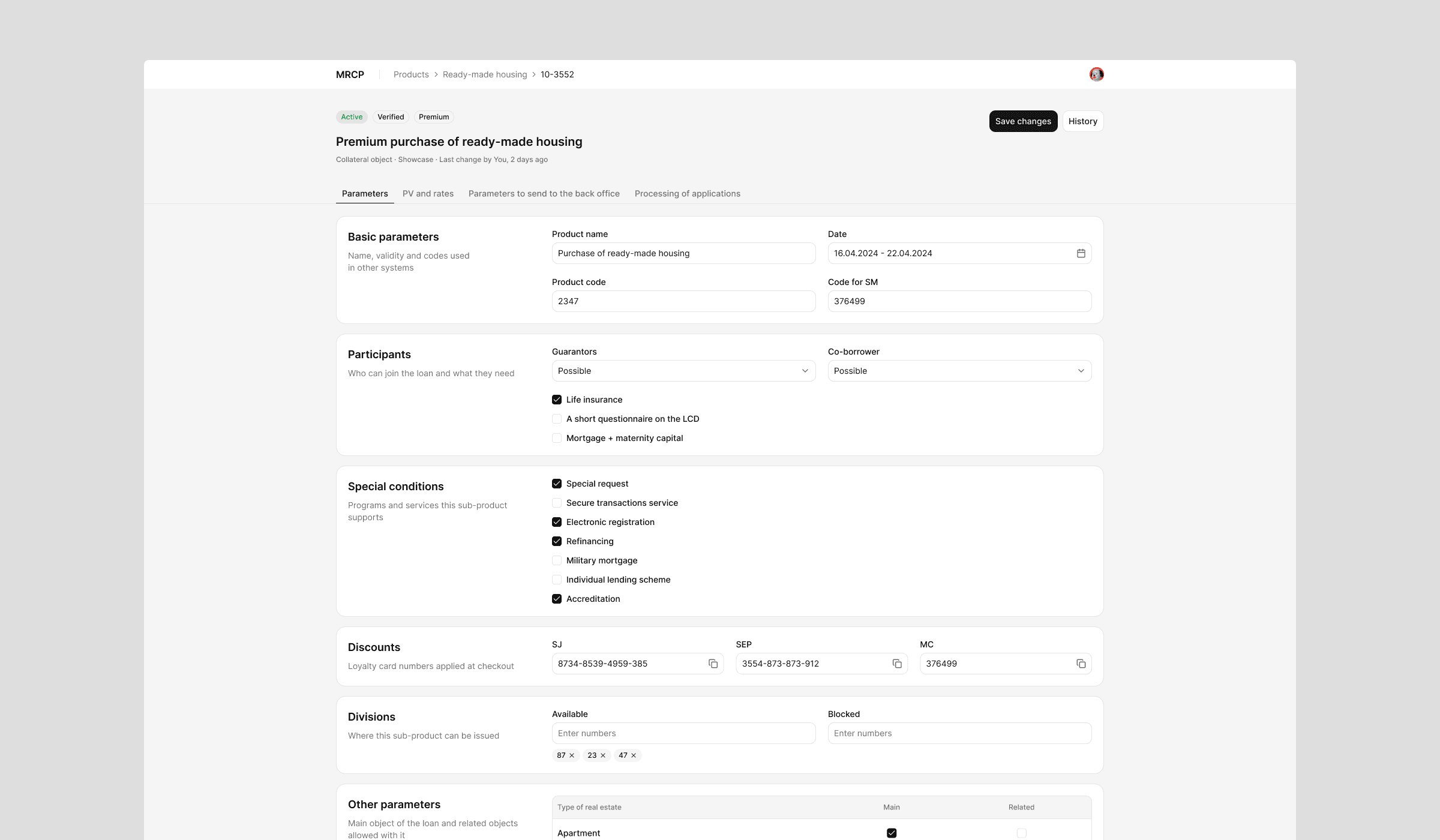
The core job is simple. Find the product, find the parameter, change the rate correctly. The old tool made each step slow. A 14-column table repeated the product in every row and made you work out the status from dates. The rate matrix was 90 separate fields, edited one at a time. Every mistake had to be caught by the head of the department in a manual final check.
I designed next to the people who used it. Ten interviews showed the team relied on one core function out of the whole tool. The gemba sessions showed when that function hurts most. When the central bank changes its key rate, managers have to update rates across many products by hand, fast, with no tool tracking the change for them. Nobody mentioned this in interviews. It became the center of the redesign.
Key decisions
Cut what nobody uses
Removing around twenty features was the riskiest call, because a wrong cut leaves people without something they need. Usage evidence from ten people made it safe, and nobody pushed back.
Make the table readable at a glance
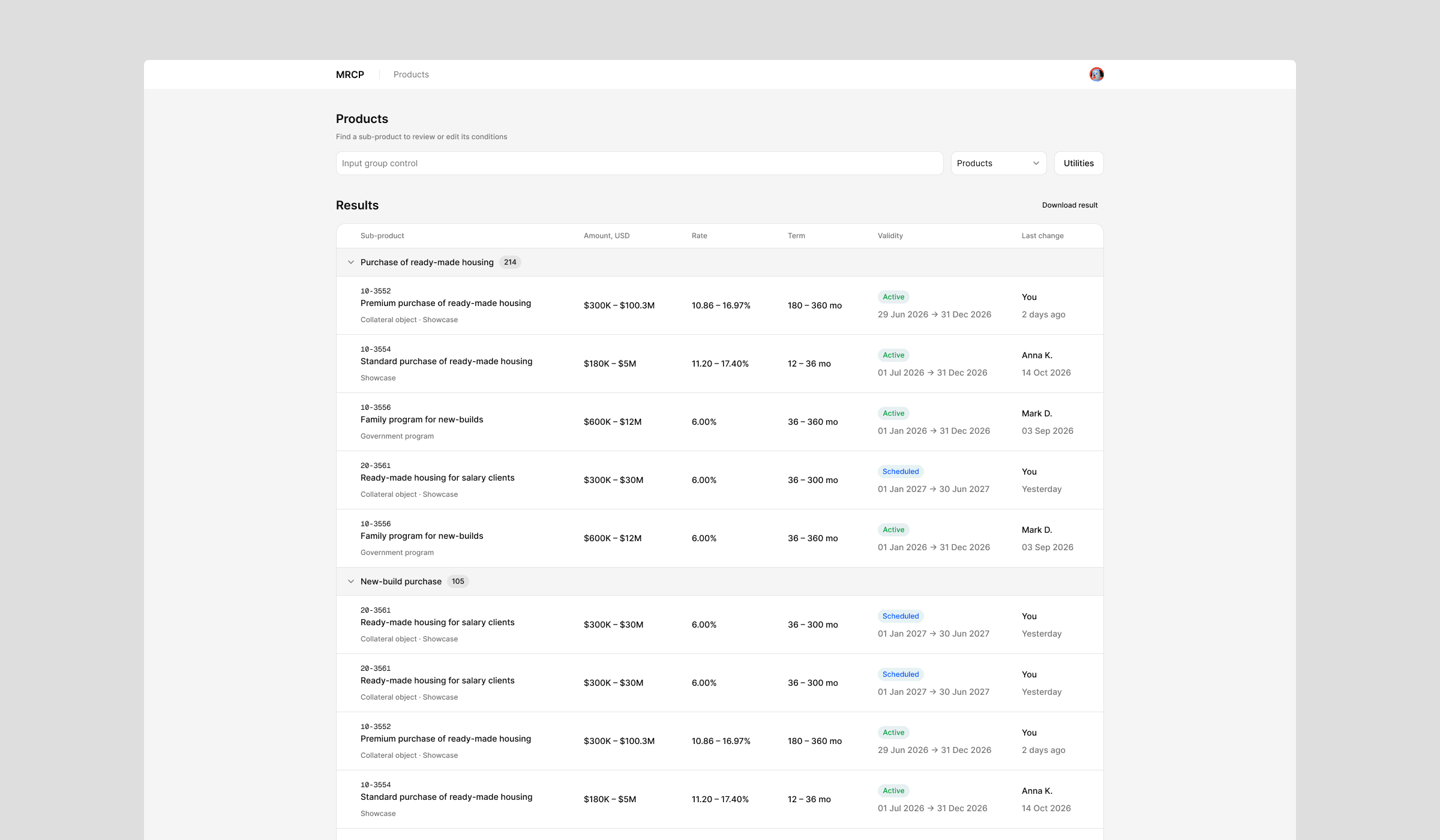
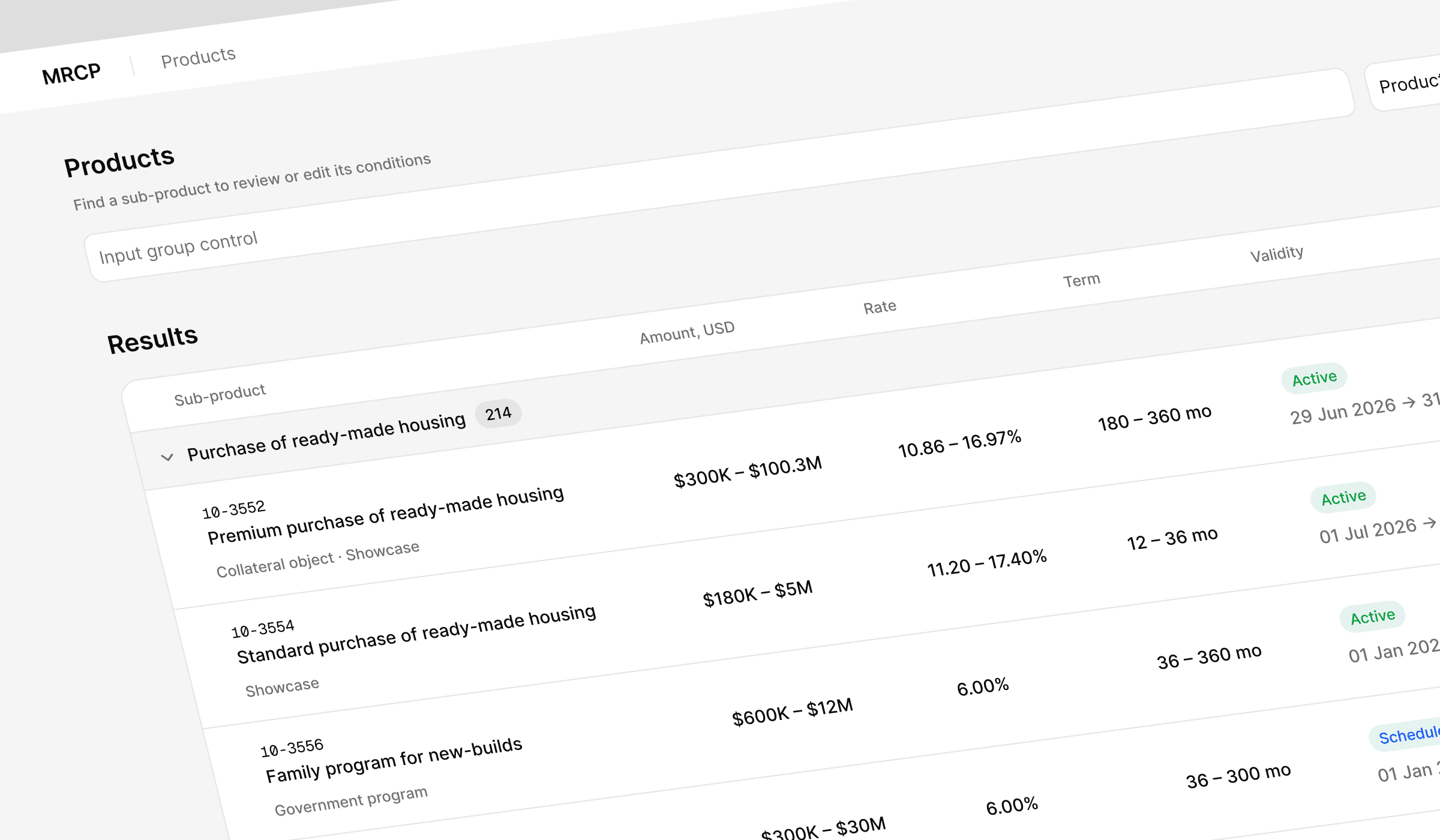
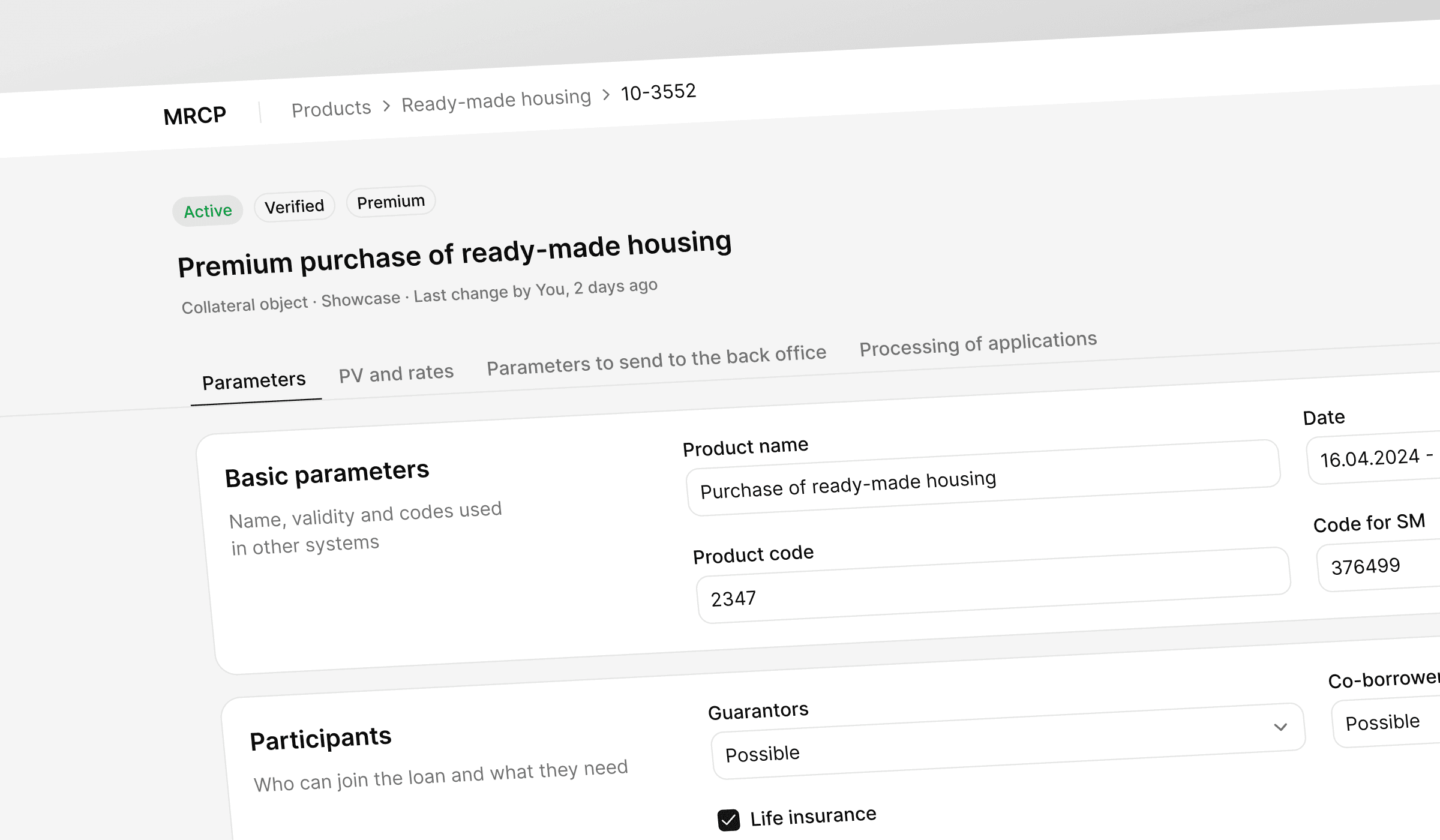
Products became groups instead of a value repeated in every row. Min and max ranges collapsed into one cell. Status became a badge instead of something you calculate from dates. Search accepts several codes at once, because managers often update a batch.
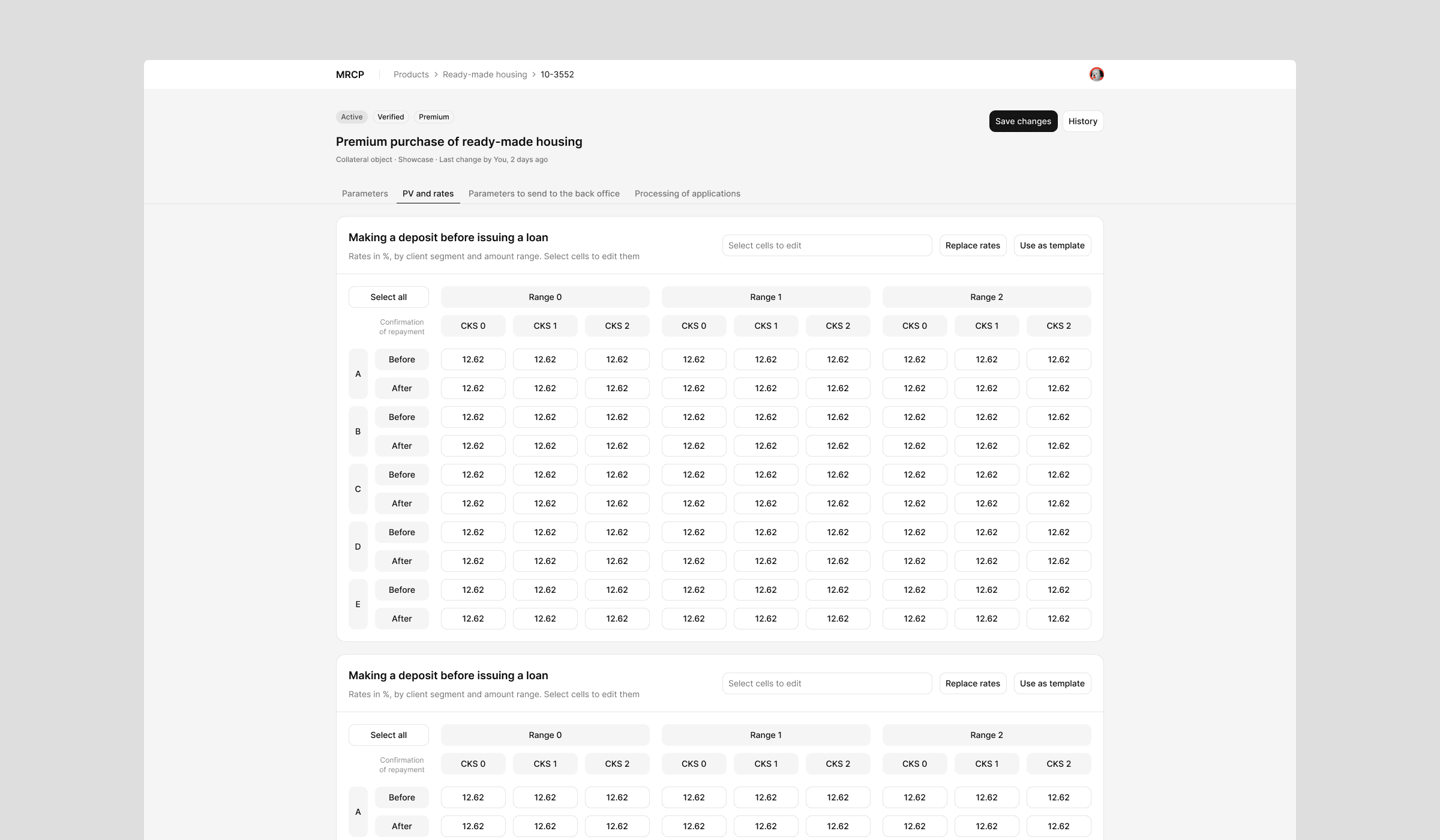
Edit the matrix as a whole, not cell by cell
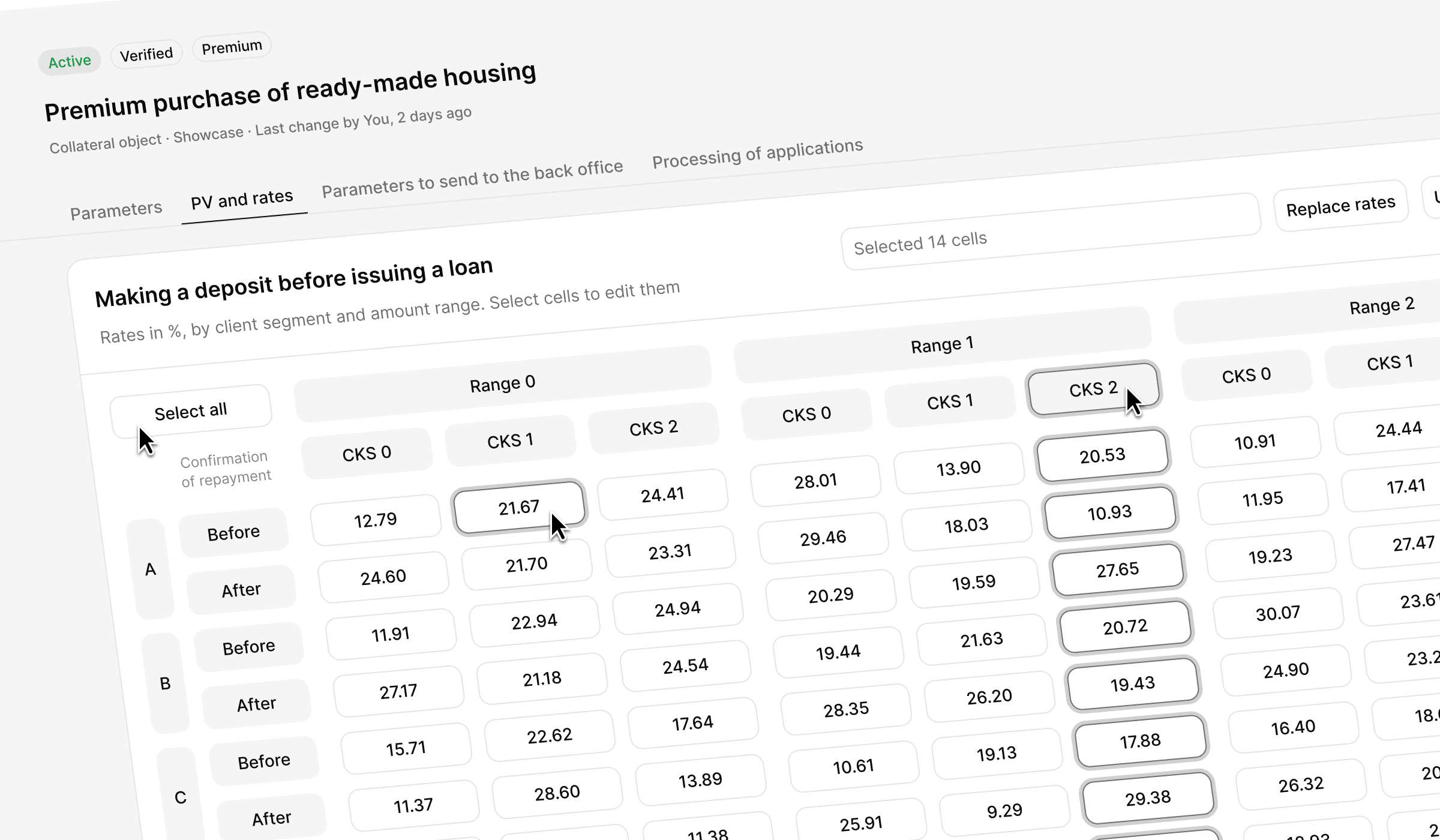
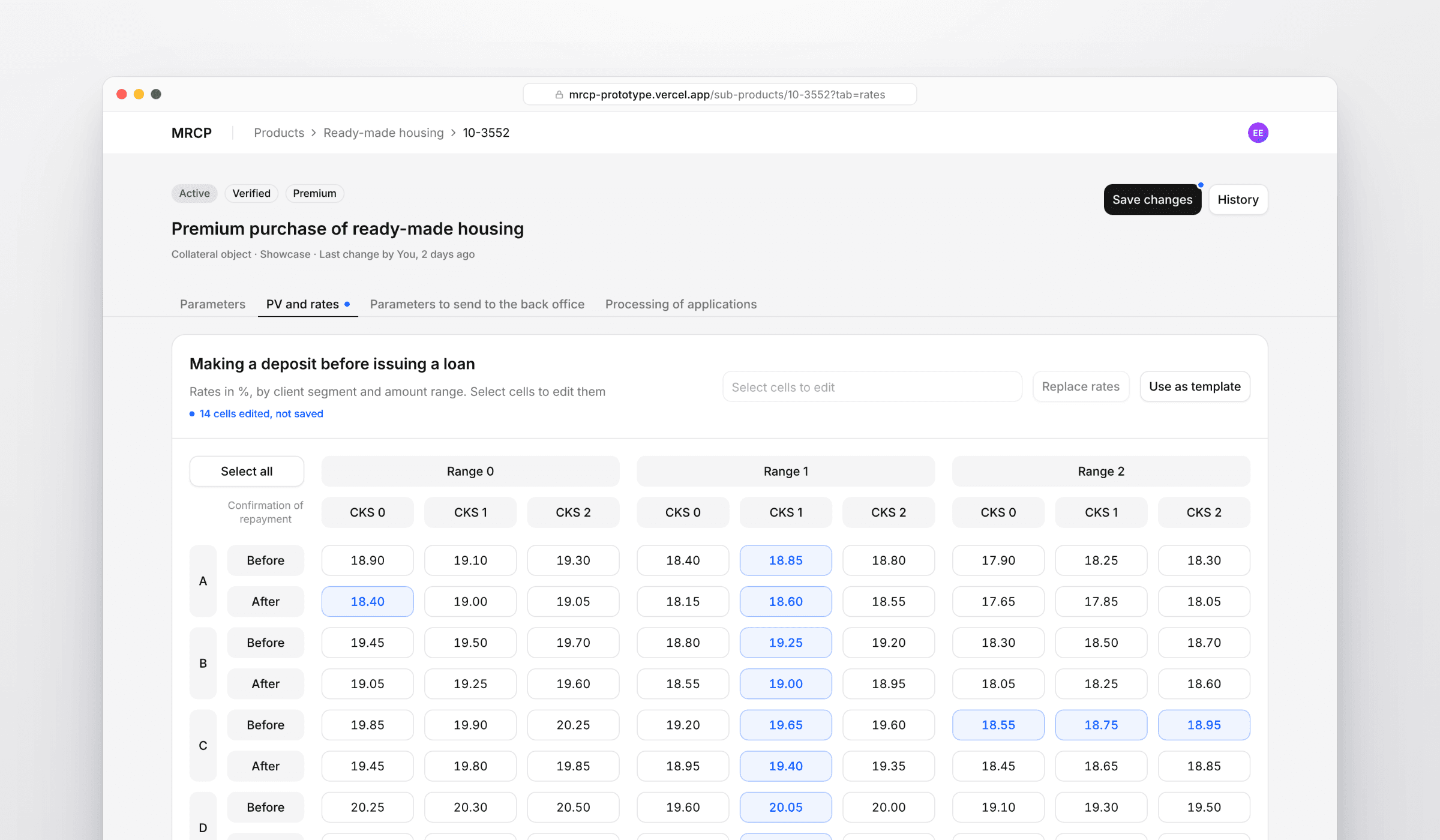
This is the answer to the key rate day. Managers select a cell, a row, a segment or any area, then apply one operation to all of it. Set a value, add or subtract points, multiply, divide or change by a percent. One action replaces dozens of separate edits.
Let large changes wait safely
A rate update can touch many products. Draft saving lets a manager pause a large change without losing it and come back to finish it.
Outcome
Timed tests before and after the redesign, on finding a parameter and changing a rate, showed both tasks getting more than 50% faster. Matrix errors dropped by 76%, based on error logs and the final check by the head of the department. The tool now belongs to Domclick, not to leftover bank infrastructure.
What's next
The final review stayed manual. The next step is building it into the tool. Show what changed since the last approved version, flag rates far outside their usual range, and let the reviewer approve or send back in one place.